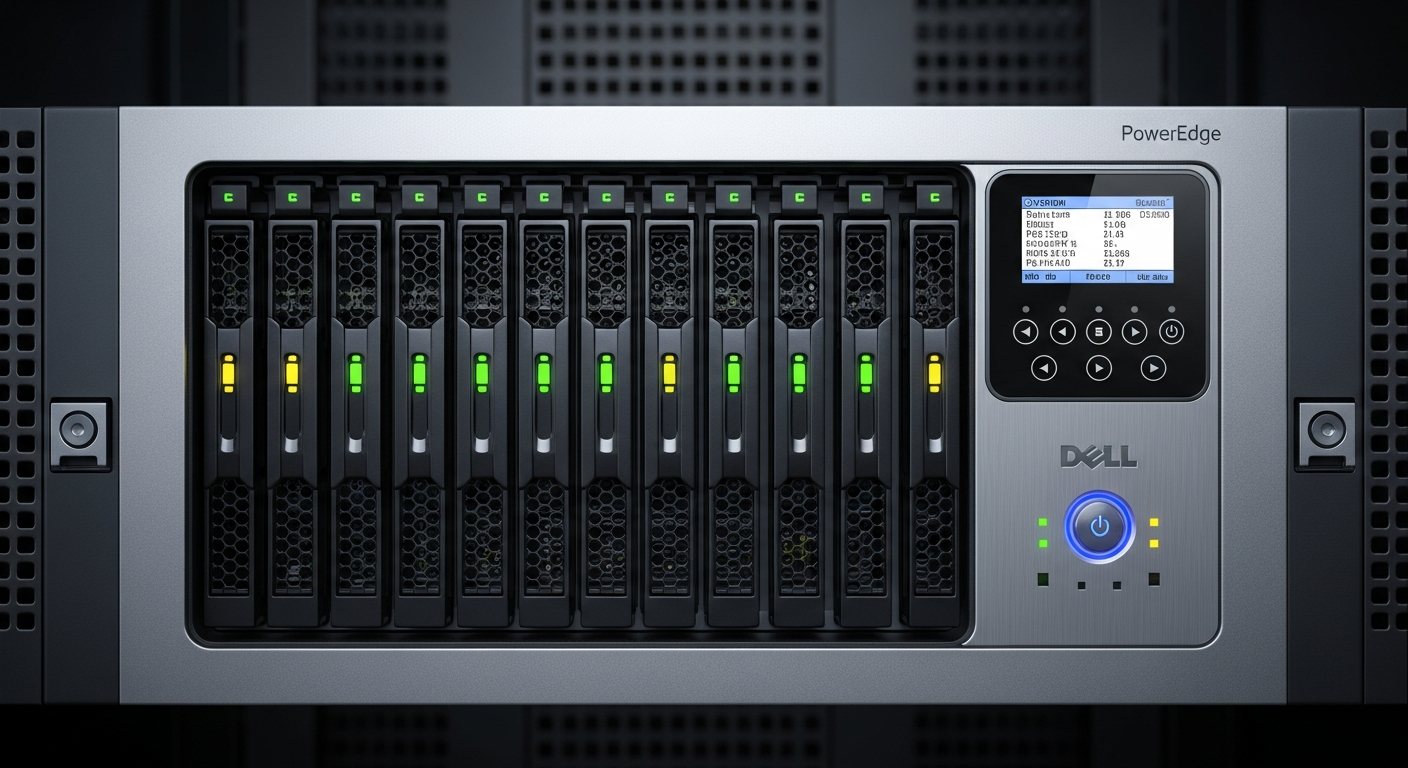
Dell PowerEdge R740: The Backbone of My Homelab
A deep dive into the PowerEdge R740 and why it is still one of the best platforms for a serious home lab environment.
Why the R740
The Dell PowerEdge R740 is a 2U rack server that hits a sweet spot between performance, expandability, and availability on the used market. I have multiple R740s in my lab, and they handle the bulk of my virtualization and storage workloads.
The R740 supports dual Intel Xeon Scalable processors, up to 3 TB of DDR4 ECC memory across 24 DIMM slots, and has room for up to 16 2.5-inch drives or 8 3.5-inch drives depending on the chassis configuration. For a homelab, that kind of flexibility is exactly what you want.
iDRAC: The Killer Feature
One of the things that separates enterprise servers from consumer hardware is out-of-band management. Dell's iDRAC (Integrated Dell Remote Access Controller) gives you full remote control over the server, even when the OS is not running. You can monitor hardware health, view real-time power consumption, access the console remotely, and even mount virtual media for OS installations.
I cannot overstate how much this matters in a lab environment. When you are testing things and inevitably break an OS installation, being able to remotely access the console and reinstall without physically touching the machine saves hours.
Storage Configuration
I run my R740s with a mix of SSDs and spinning drives. The front bays hold NVMe and SATA SSDs for VM storage, while a separate chassis extension handles bulk storage on larger drives. The PERC H740P RAID controller handles the hardware RAID, though I have been experimenting with passing drives through to ZFS for more flexibility.
Noise and Power
The honest truth about running enterprise servers at home is that they are loud and power-hungry. An R740 under load pulls around 400 to 600 watts, and the fans are not subtle. I have spent time tuning fan profiles through iDRAC and making sure the ambient temperature stays reasonable, but it is never going to be silent.
If you are considering one for a homelab, plan for the power bill and the noise. It is worth it for the capabilities, but go in with realistic expectations.
Getting One
Used R740s are available from resellers and auction sites. Prices vary a lot based on configuration, but you can get a solid base system for a reasonable price and add memory and drives over time. Buy from reputable sellers, check the service tag for warranty status, and inspect the drive backplane before committing.