Incident Response: What to Do When Things Break
My approach to handling infrastructure incidents, from detection through resolution and documentation.
Incidents Will Happen
No matter how well you design and maintain your infrastructure, things will break. Hardware fails. Software has bugs. Configuration changes have unintended consequences. The question is not whether incidents will happen, but how effectively you respond when they do.
My Framework
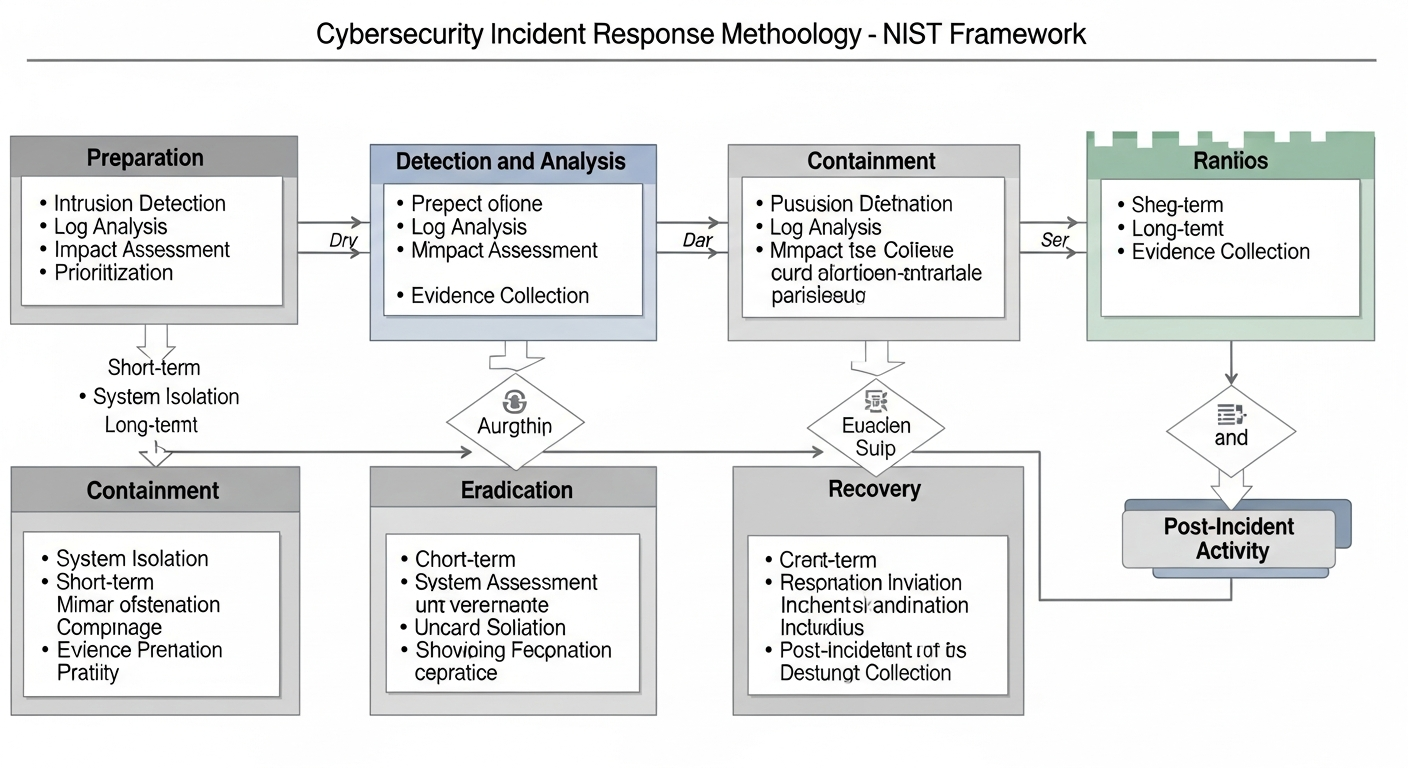
I follow a structured approach based on established incident response frameworks:
1. Detect and Identify
The first step is knowing that something is wrong and understanding what is affected. Monitoring and alerting handle detection. Identification means determining the scope: what service is down, who is affected, and what is the business impact.
2. Contain
Stop the problem from getting worse. If a server is compromised, isolate it from the network. If a configuration change broke connectivity, roll it back. If a process is consuming all system resources, kill it. Containment is about limiting damage while you figure out the root cause.
3. Diagnose
Find the root cause. This is where log analysis, packet captures, and systematic troubleshooting come in. Start with what changed recently. Most incidents are caused by recent changes, even if the relationship is not immediately obvious.
4. Resolve
Fix the problem. Apply the patch, replace the hardware, correct the configuration, or restore from backup. Verify that the fix actually works and that the service is fully restored.
5. Document
Write down what happened, when it happened, what caused it, how it was fixed, and what will prevent it from happening again. This is the step most people skip, and it is arguably the most important one. Good incident documentation prevents recurring problems and helps you respond faster next time.
Communication
During an incident, clear communication matters. Even in a homelab where I am the only user, I keep a running log of what I have tried, what I have found, and what I plan to do next. This prevents going in circles and provides a record for the post-incident review.
Practice
I occasionally create intentional incidents in my lab environment to practice response procedures. Breaking something on purpose and then fixing it under time pressure is the closest thing to real-world incident response training you can get without actual production incidents.