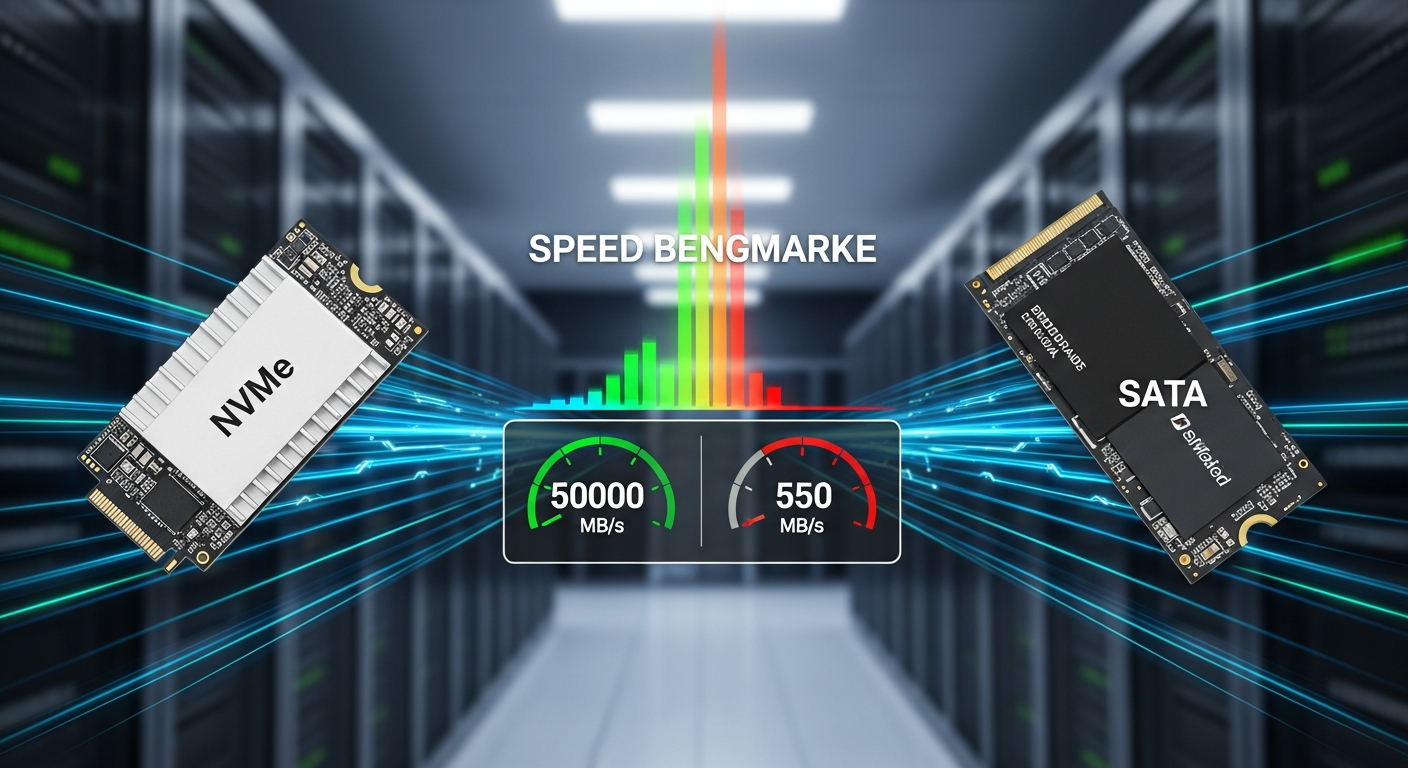
NVMe vs SATA in Enterprise Storage
The performance gap between NVMe and SATA is real and significant. Here is when it matters and when it does not.
The Numbers
A typical SATA SSD tops out at around 550 MB/s sequential read. A modern NVMe SSD reaches 5,000 MB/s or more on PCIe 4.0, and enterprise NVMe drives designed for consistent random I/O push even harder. The gap is not marginal. It is an order of magnitude.
But raw speed is only part of the story. The more important metric for servers is IOPS (input/output operations per second) for random small-block reads and writes. That is where NVMe really pulls ahead.
Where NVMe Wins Clearly
VM storage: Virtual machines doing lots of random I/O benefit enormously from NVMe. Boot times drop, responsiveness improves, and you can run more VMs per storage device before hitting I/O bottlenecks.
Database workloads: Any database doing lots of small random reads and writes sees dramatic improvements with NVMe.
Live migrations: Moving a running VM between hosts over NVMe-backed storage is smoother and faster than SATA.
Where SATA Is Still Fine
Bulk storage and archives: If you are storing backup files, logs, or large media files that are written once and read occasionally, SATA is perfectly adequate. Sequential throughput on SATA is more than sufficient for these workloads.
Cold data tiers: Many storage systems implement tiering, where hot data lives on NVMe and cold data moves to SATA or spinning disk. SATA fits naturally in this architecture.
Enterprise NVMe Specifics
Consumer NVMe drives are not designed for 24/7 server duty. Enterprise NVMe drives have features like power loss protection (capacitors that complete writes if power fails), consistent latency profiles under sustained load, and much higher endurance ratings.
In my lab, I run NVMe for VM storage pools and SATA SSDs for secondary storage. The performance difference is obvious in daily use, and the cost difference has narrowed enough that NVMe is the right choice for anything performance-sensitive.