Why Homelabs Matter for Learning Networking
How running real enterprise hardware at home changed the way I learn about networking, systems, and troubleshooting.
Beyond the Textbook
Reading about VLANs and subnetting is one thing. Configuring them on real hardware, breaking something, and spending two hours figuring out why your trunk port is dropping tagged traffic is a completely different experience. That is why I run a homelab.
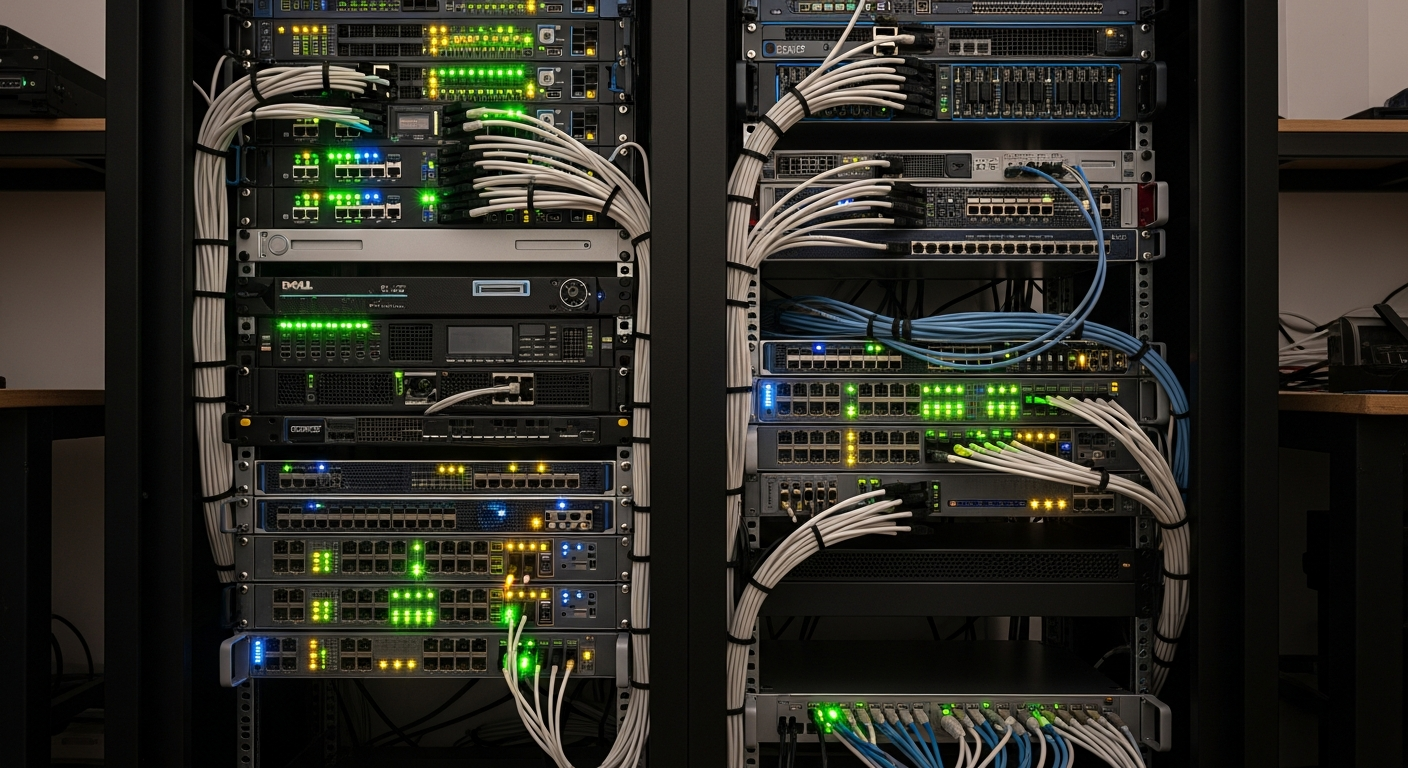
My homelab runs multiple Dell enterprise servers with serious compute and storage capacity. It is not a Raspberry Pi cluster or a single tower PC. It is enterprise hardware running enterprise workloads, and that is the point.
What I Actually Run
The core of the lab is built around Dell servers. I use them for:
- Virtualization workloads to simulate multi-site environments
- Network segmentation testing with real VLANs, trunking, and inter-VLAN routing
- Storage experiments to understand capacity planning, redundancy, and performance
- Security testing with isolated segments for controlled lab exercises
Why Scale Matters
A lot of people ask why I need that much hardware at home. The answer is that real environments are messy. When you only have one server and one switch, everything is simple. When you have multiple systems, multiple network segments, and real data moving between them, you start hitting the problems that professionals deal with every day.
That is where the real learning happens: debugging a routing issue across segments, figuring out why a firewall rule is blocking traffic you expected to pass, or tracing a performance problem through layers of infrastructure.
Building Good Habits
The homelab also taught me documentation habits. When you have complex infrastructure, you cannot rely on memory. I keep diagrams, runbooks, and change logs. Every time I make a change, I document what I did, why I did it, and how to reverse it if something goes wrong.
These habits carry directly into professional environments. The difference between a good administrator and a great one is often just documentation and discipline.